
Welcome to Probabilistic Publishing!
Just for fun, here's a link to Dave's band's first music video: link. This short video will put a smile on your face!
See www.DKFBand.com for more information about the band.
Our Mission
Probabilistic Publishing provides decision analysis books and resources for managers, decision analysis practitioners, trainers, and technical professionals. We keep key foundational works available and in print so that both the experienced person and the beginner have access to a sound basis for learning.
In addition to select new titles, we are also interested in adding publications that our clients wish were available but, for whatever reason, are no longer in print. Recently we've added three biographies to our portfolio: Your Mother Should Know by Angie McCartney, Beyond Zoar Valley, 2nd Edition by Edna Busekist, and Generations by Howard and Elsid Charlesworth.
Our products are priced competitively so that they are affordable for students and professionals. We offer quantity discounts for trainers and professional discounts for members of most professional organizations.
Dave's Book Published by Business Expert Press
Business Expert Press (BEP) has published a book by David Charlesworth entitled Decision Analysis for Manager, A Guide for Making Better Personal and Business Decisions. The Kindle edition and the print edition are avalable from Amazon and BEP websites (click below for Kindle edition) and make sure you order the 2nd edition.
BEP has also published an "app" associated with my book, which is interesting.
My good friend and colleague Jeff Circle noted that the Figure 4.7 on page 39 did not print properly. Below is the correct figure; thank you Jeff!
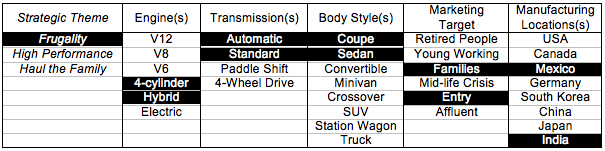
Figure 4.7, page 39, Decision Analysis for Managers

Who We Are
Probabilistic Publishing is literally a "mom and pop" shop - Debbie is "mom" and Dave is "pop!"
Debbie is a practicing chemical engineer who currently works for Fluor Daniels in Sugar Land. She previously held engineering positions with DuPont, Conoco, and PCR. She also taught 7th and 8th grade math in between engineering assignments. Debbie received her degree from Vanderbilt University in Nashville and grew up in the suburbs of Cleveland, Ohio.
Dave is also a chemical engineer. He held positions at DuPont, Conoco, PCR, and Decision Strategies before joining Chevron in 2005. Dave retired from Chevron in November, 2015. Dave's DA interest and career began while he was working for Tom Sciance in Ponca City, OK and carried through into DSI and Chevron. He has a degree in chemical engineering from Indiana Tech and an MBA from (go Gators!) the University of Florida. Dave grew up on a dairy farm in Upstate New York.

Dave and Debbie Charlesworth
Or you can purchase at the iTunes store:
Our History
Project One
In 1998, David Skinner asked us if we would be interested in publishing a second edition of his book, Introduction to Decision Analysis. He had published the first version himself, but was working on a significantly enhanced second edition. This was the start of our publishing company. The editing process was time consuming for this project, mostly because of our inexperience. We did the graphics with several different programs, which was a mistake. Jean Schroeder from Sheridan Books was very patient with us going through the offset printing process, and we worked with Jean until she retired. The second edition was released in April, 1999. At that time there was no digital short run available, so we had a couple of thousand copies printed via offset printing. We found quite a few things to correct with that first printing. The book itself, however, proved to be useful and sold well. John Lynn from Dupont provided many of the corrections.
Project Two
Our second project was a second edition of Bob Winkler's classic: An Introduciton to Bayesian Inference and Decision. This was a more difficult project, as the text was longer than David's book, the subject material more challenging to understand, and we used Framemaker instead of Pagemaker. We used Illustrator to do the graphics and learned how to make the graphics more consistent throughout the text. We did the first printing of this book with two internal colors, which was very attractive. Unfortunately I got some of the colors in the graphics mixed up and even though our proof copy was correct, some of the graphics in Chapter 4 did not come out correctly. We also included a CD with this book, but later decided to provide a link for downloading the material on the CD.
The second printing of this book could be considered a separate project, as we went from two interior colors to one, redrew many of the graphics, and developed a new cover.
Project Three
Our next project was Pat Leach's Why Can't You Just Give Me The Number?". We decided to do several short-run digital runs with this book before going offset in late 2009. I used glossy paper for the offset run, as I thought the graphics and sidebars would look better with the glossy paper. We used Pagemaker again for this book and used Illustrator for the graphics.
Early in 2009, I paid a small firm in Austin (a one-person company at that point) to port Number? to the Kindle. This title had done very well in print (over 3,000 copies at that point, which is good for us), but the Kindle sales were disappointing�just one copy every few weeks. In December 2010, I dropped the price from $19.95 to $9.99 after Amazon implemented a 70 percent royalty program for books priced at $9.99 or less, and sales increased.
Project Four
We started working on the third edition of Introduction to Decision Analysis in 2006. Paul Wicker volunteered to edit this edition, for which we were very grateful. This project took a long time, as it represented a significant upgrade versus the second edition. We used Framemaker for this project and completely re-drew every graphic in the book using Illustrator. We did one short run digital printing, but could have gone straight to offset with this title except for the cover (see Introduction to Decision Analysis Product Page for the story of the third edition's cover).
Project Five
Our fifth project is Game Theory for Business by Paul Papayoanou. After completing the digital shortrun printing of this project in December, 2010, I contacted the same guy in Austin who had converted Number?, and he told me that he had six employees and an eight- to twelve-week backlog of conversion projects. I guess the conversion business is going well! Rather than wait, I decided to do the conversion myself. I used Apple�s Pages and ported both Number and Game Theory to the iBook format. It took several months, but I was finally approved by Apple to sell at the iBookstore (they seem to really want you to go through a third party they have an alliance with, and to make it difficult to sign up). Then I used a conversion program to convert from iBook to Kindle for Game Theory. I priced both titles at $9.99 in the iBookstore.
This title has sold very well electronically. I'm not sure why it differs from Number?, as both titles are "airplane books," have a similar page count, and are designed for the same audience (an "airplane book" is one that you can easily put into your briefcase or backpack and read whilst flying in the plane).
Project Six
Our 2013 project was Creating a Culture of Profitability by Rob and Aviva Kleinbaum, published November 8, 2013.
Rob told me about their work adapting Lawrence Harrison's culture studies to business some time ago, and we agreed to read his manuscript. To us, their book was a diamond in the rough - excellent concepts that resonated with our own experience in the corporate world. The editing process took quite a bit of time, as we wanted to make sure that a first-time reader could understand the flow of the material and the frameworks that the Kleinbaums developed. We had many productive and spirited discussions (especially when Rob's work brought him to the Houston area) as we worked through the material and ended up being good friends as a result of doing the work. Rob uses the word "revolutionary" in the subtitle, and that is an accurate description. Nobody else has had the insight to codify effective business culture, including how to diagnose your own corporate culture and how to affect meaningful change. If you want to change the culture of your organization, this book gives you a logical and systematic framework to do so.
Project Seven
We're pleased to be able to offer an updated verision of Pat Leach's excellent book, Why Can't You Just Give Me The Number? The basic concepts contained within the first edition are still very relevant and timely, however, a few of the examples had become dated. So we decided that (1) a new cover was needed, and (2) Patrick had enough new material and enough revisions to merit a new edition. This was a relatively easy project for us, as Patrick is an excellent writer and his writing needs only minimal editing.
The cover was challenging, as we wanted to both change significantly from the first yet wanted to continue the same themes (the photo for the First Edition was purchased). We bought the compasses and figures shown in the picture, used a figure from the book as backdrop, and our son Michael took the photograph. We didn't like the "men only" aspect of the First Edition cover, and thought that two compasses, each pointing in different directions, was appropriate considering the themes contained within the book. If Patrick writes a third edition, we'll have to figure out how to get three compasses into the picture!
Project Eight
I made the comment in the Publisher's Note of Project Risk Quantification that I wished that I had been able to read John's book 30 years ago, and that is a very accurate statement! Project engineers need to understand the entire context of project management and risk, which John capably covers. Engineering managers need to go past understanding the material to using it as projects are developed, authorized, implemented, and started up. Reponse to this new title has been strong, and I hope it continues - our society needs projects that are on time, on budget, and that work. I heard a presentation by SPE that cited a 2012 IPA study in the oil & gas sector that found that about 1/3 of the projects were late, 1/3 of the project were significantly over budget, and about 2/3 of the projects had major operational problems. If the engineering community can use John's approach to projects, we should be able to improve this rather dismal performance.
Project Nine
Problem, Risk, and Opportunity Management was a difficult project. Dr. Hagen's initial manuscript was really long and complex, which is understandable, as it documented literally decades of learnings from intense study and his consulting practice. We're grateful for Brian's patience as we went through the editing and layout. There are powerful insights in this comprehensive book!
Project Ten
Craig McKnight's The Business of Negotiation contains everything you need to improve your ability to netogiate. His stories are especially helpful. Craig taught a negotiation fundamentals course while he worked for Chevron and has hundreds of alumni throughout the world.
Project Eleven
We published Your Mother Should Know by Angie McCartney in December, 2019. This is our first biography and is a wonderful little book � interesting and fun to read. Angie and Ruth McCartney taught us how to use QR codes as part of this effort.
Project Twelve
We published Generations by Howard and Elsie Williams Charlesworth on 9/6/2022. This is our second biography.
Project Twelve
We published the second edition of Beyond Zoar Valley by Edna Busekist in December, 2022. This is our third biography. Thank you Ernie Dankert, Ron Pfeffer, John Busekist, and Rhonda Busekist!
